 Business License

What kind of charging cable should come with the vehicle charger
With the popularization of electric vehicles and the increase in demand, the car charger has become one of the necessary equipment for electric vehicle owners. Vehicle charger is mainly a charging solution for long-distance travel of pure electric vehicles and the lack of installation of home charging piles at home. As an important part of the vehicle charger, the quality and adaptability of the charging cable is especially critical.
1. Compatibility: The charging cables accompanying the vehicle charger should have broad compatibility and be able to adapt to different makes and models of electric vehicles. Different electric vehicles may adopt different charging interface standards, such as the international standard Type 1 (SAE J1772) and Type 2 (IEC 62196) interfaces, as well as brand-specific fast-charging interfaces (e.g. Tesla's Supercharger interface). Therefore, the charging cable should have the ability to adapt to multiple interfaces to meet the charging needs of different electric vehicles.
2. Safety: The charging cable with vehicle charging should comply with relevant safety standards and certification requirements during the design and manufacturing process. For example, the IEC 61851 standard formulated by the International Organization for Standardization specifies the safety requirements for electric vehicle charging equipment, including the insulation performance, voltage resistance, water and oil resistance of charging cables. In addition, some countries and regions have developed specific safety certification standards, such as EN certification in Europe, PSE certification in Japan and UL certification in the United States. Choosing charging cables with qualified certification can ensure the safety and reliability of the charging process.
3. Length and capacity: The charging cable accompanying the vehicle charger should be of appropriate length and capacity to meet the needs of different charging scenarios. Generally speaking, the length of the charging cable should be long enough for flexible use in different parking lot scenarios. At the same time, the capacity of the charging cable (i.e., current transfer capability) should also match the charging needs of the EV. Different models of EVs may have different charging power requirements, so the capacity of the charging cable should be able to support the corresponding charging power output. The car chargers on the market are mainly 220V, commonly used in 10A or 16A sockets.
4. Durability: The charging cable of the vehicle charger should have good durability and be able to withstand long time use and various environmental conditions. The external material of the charging cable should be resistant to high temperature, low temperature, abrasion and chemical corrosion to ensure its reliability and durability in different climatic and road conditions.
OMG', as an excellent international provider of new energy charging application technology, has rich industry experience and professional technical team from design and R&D to mass production, and has more than 17% of the global electric vehicle charging cable market share.OMG' charging cables are certified by international standards such as EN, IEC, UL, CQC, DEKRA, PSE and so on, and they have the properties of softness, abrasion-resistant, bending-resistant, dragging-resistant, crack-resistant, UV-resistant and so on. Dragging, cracking and UV resistance. OMG' can customize the charging cable according to the user's application requirements for on-board charging to ensure the charging process of electric vehicles is safe, efficient and convenient.
Recently Posted
-
"Small wire diameter, high current"|OMG'European standard oil-cooled charging
December 13, 2024With the rapid development and popularization of electric vehicles, oil-cooled charging cables have attracted much attention as an Read More
 -
More lightweight design|UL certified charging cable
December 13, 2024OMG'UL certified charging cables include conventional products and the new NACS series of off-standard nylon constructions, wi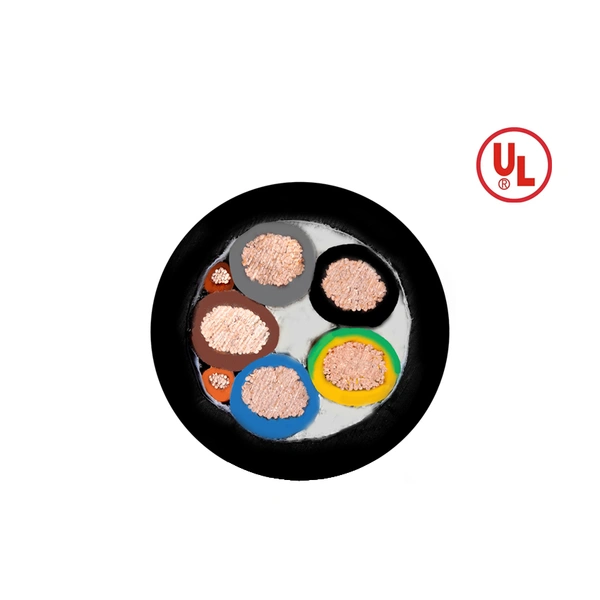 Read More
 -
Understanding the European Standard Charging Cable Designation
December 13, 2024Electric vehicle charging equipment needs to have industry standards for its safety and reliability to do constraints and guarante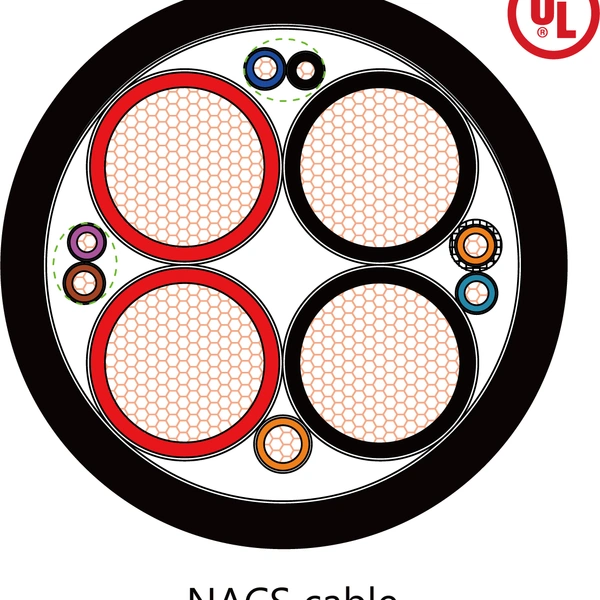 Read More
 -
What do we need to do to ensure charging safety when charging electric vehicles?
December 13, 2024The charging safety of electric vehicles has always been concerned by the market, the following is to focus on charging safety fro Read More

Contact Us
Recommended Products
-
 1500V DC Oil-cooled EV Charging Cable - IEC 62893-4-2 StandardNegotiableMOQ: 300 Meters
 -
Water-Cooled High Power Charging (HPC) Cable 700A 1500V DC for EV Fast ChargingNegotiableMOQ: 300 Meters
-
UL 2263 EV Charging Cable | Flexible TPE/PVC Electric Vehicle CableNegotiableMOQ: 300 Meters
-
IEC 62893 High Power 1500V DC EV Charging Cable for Fast ChargersNegotiableMOQ: 300 Meters
-
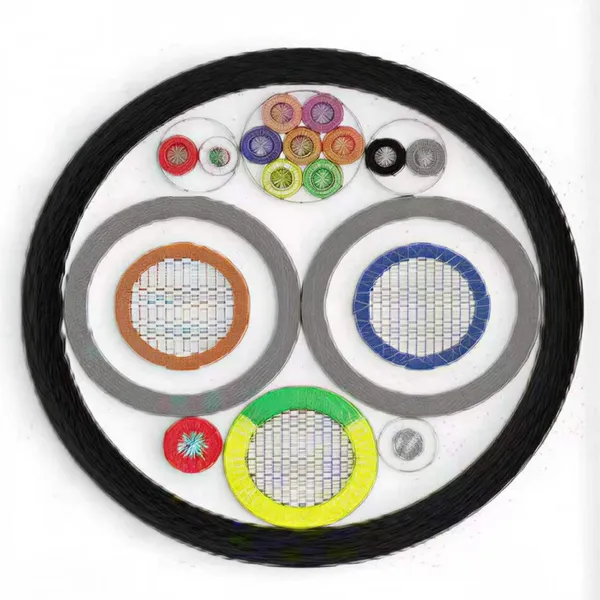
1500V DC EV Charging Cable - IEC 62893 Compliant | OMG EV CABLENegotiableMOQ: 300 Meters
-
OMG EV CABLE (IEC 62893) 450/750V AC Electric Vehicle Charging Cable (62893IEC121 62893IEC123)NegotiableMOQ: 300 Meters
-
OMG' EV Charging Cable 1000V EN 50620 H07BZ5-F for Electric Vehicle Charging ConnectorNegotiableMOQ: 300 Meters
-
EN 50620 EV Charging Cable 450/750V H07BZ5-F for Electric Vehicle Charging ConnectorNegotiableMOQ: 50 Meters
-
OMG ' Multi-Core Shielded EV High Voltage Cable for New Energy Vehicles XLPE InsulatedNegotiableMOQ: 300 Meters
-
OMG EV High Voltage Cable UL758 XLPE Insulated Shielded Wire for Electric VehiclesNegotiableMOQ: 300 Meters
-
UL EV Charging Cable(Suitable for NACS、CCS1)NegotiableMOQ: 50 Meters
-
AC1500V HV Flexible CableNegotiableMOQ: 50 Meters
-
QC/T1073 Multi-core Shielded High-voltage CableNegotiableMOQ: 50 Meters
-
QC/T1073 EV High-voltage CableNegotiableMOQ: 50 Meters
-
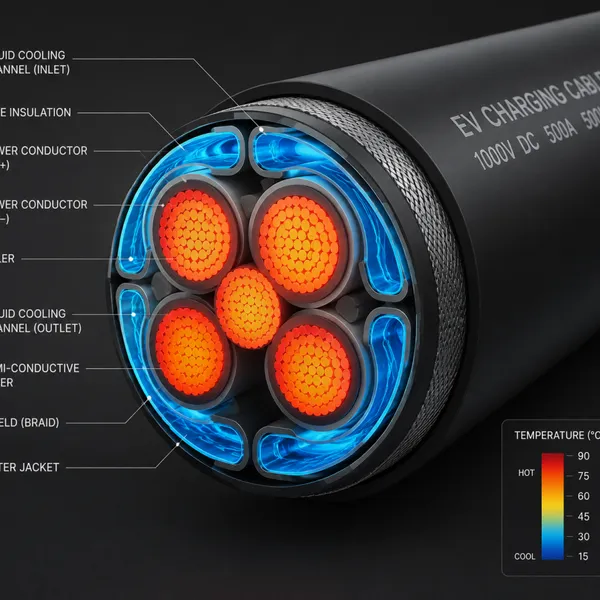
Liquid-cooled HV CableNegotiableMOQ: 50 Meters